The Elegant Equation
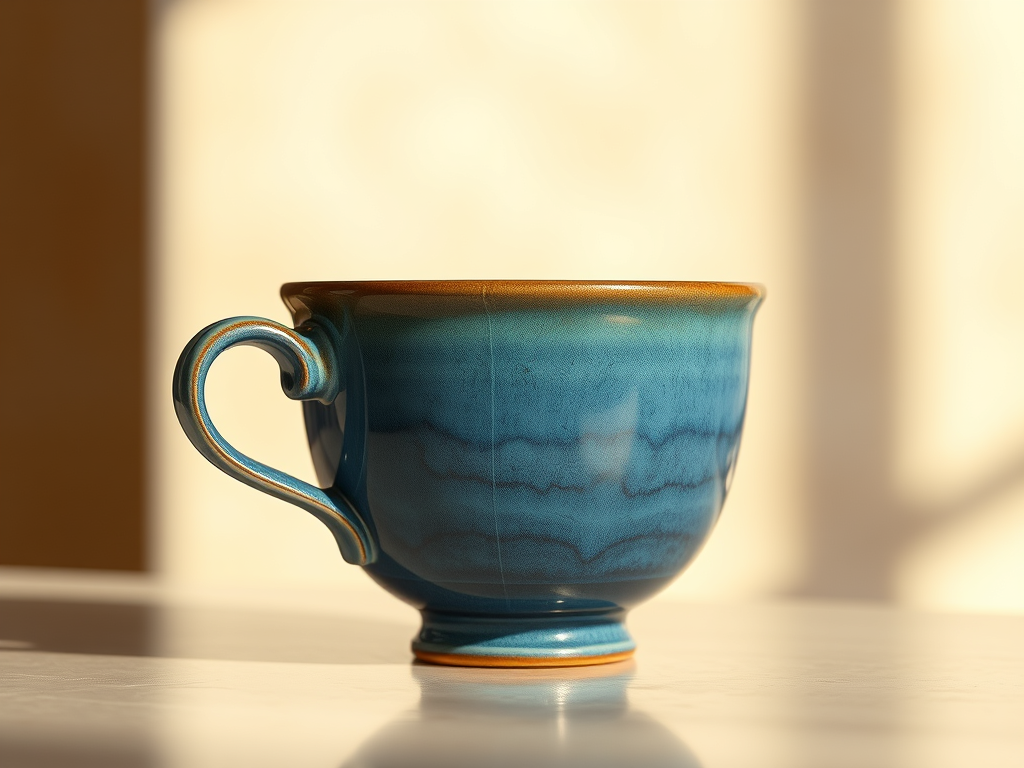
In a museum, we stand in silent reverence before a painting. In our home, we lift a ceramic teacup to our lips, its weight and curve a quiet pleasure against our palm. This cup—its glaze a perfect riverine blue, its handle shaped for balance—belongs to the vast, vital, and often overlooked realm of the decorative arts. Here, aesthetics are not a distant ideal but a lived experience. The decorative arts represent the profound and essential intersection where beauty partners with utility, where artistic vision is tested against the demands of the hand, the body, and daily life. They are the art we live with, touch, and use—the tangible proof that our environment need not be merely functional, but can be a source of dignity, meaning, and delight.
Beyond Ornament: The Philosophy of the Applied
To dismiss decorative arts as mere “craft” or “ornament” is to misunderstand their core principle: form follows function, but is elevated by art. This is a discipline of intelligent making. Every object begins with a purpose—to contain, to support, to illuminate, to adorn. The artisan’s genius lies in solving that functional problem with such elegance, harmony, and expressive use of material that the solution becomes a work of art.
This requires a dual mastery. First, a deep, respectful knowledge of materials and techniques: the behavior of clay in the kiln, the tensile strength of silk thread, the way light passes through stained glass, the joinery that allows wood to expand and contract. Second, a sophisticated artistic sensibility for design, pattern, and form. A William Morris textile is not just a durable fabric; its repeating, botanical patterns reflect a philosophy of organic unity and a rebellion against industrial alienation. A Ming Dynasty porcelain vase achieves a silhouette of such serene perfection that its function as a vessel is transcended by its embodiment of cosmic harmony. The decorative object is where the hand’s skill and the mind’s vision become one.
A Tapestry of Traditions: From the Wunderkammer to the Bauhaus
The history of decorative arts is a global narrative of cultural identity and technological innovation. In every civilization, the highest levels of artistry were applied to objects of ritual and domestic use.
The Renaissance and Baroque eras saw the rise of the Wunderkammer (cabinet of curiosities), where exquisite ivories, intricate automata, and pietra dura stonework were treasured alongside natural specimens. These objects displayed not only wealth but also human ingenuity’s triumph over material. In 18th-century Europe, movements like Rococo celebrated ornate, playful luxury in furniture (Boulle marquetry) and porcelain (Sèvres), while the subsequent Neoclassical period looked to Greco-Roman simplicity and order.
A pivotal revolution came with the Arts and Crafts Movement (late 19th c.), led by figures like William Morris in Britain. Reacting against the dehumanizing effects of the Industrial Revolution, they championed the dignity of the handmade, honest materials, and designs rooted in nature. This philosophy directly inspired the Art Nouveau movement, with its sinuous, organic lines flowing through architecture, glass (Tiffany), and furniture (Hector Guimard).
The most radical functionalist shift arrived with the Bauhaus (early 20th c.). This German school proclaimed the unity of art, craft, and technology under the mantra “form follows function.” Bauhaus designers like Marcel Breuer (Wassily Chair) and Marianne Brandt (teapots) stripped away historicist ornament to reveal pure, geometric form, using industrial materials like tubular steel and glass. They sought to create beautifully functional objects for the modern world, a principle that became the bedrock of 20th-century design.
The Contemporary Conversation: Art, Design, and the Handmade Today
Today, the decorative arts field is a vibrant, expansive dialogue between tradition and innovation, the handmade and the digital, the unique and the mass-produced.
The Studio Craft Movement that gained momentum in the mid-20th century affirmed the decorative arts as a vehicle for profound personal expression. Artists like Peter Voulkos in ceramics shattered the polite vessel into aggressive, abstract sculptures, while Anni Albers elevated textile weaving to a rigorous language of modernist abstraction. They demonstrated that a quilt, a pot, or a blown glass form could carry the same conceptual weight as a painting.
Simultaneously, the rise of industrial design has professionalized the creation of mass-produced functional beauty, from the iconic curves of a Charles and Ray Eames chair to the intuitive interface of a smartphone. Here, the decorative arts principle scales to global impact.
In the contemporary scene, these threads intertwine. Artists may use centuries-old techniques like Japanese urushi lacquer or Venetian glassblowing to create conceptual work commenting on consumerism or ecology. Others employ 3D printing to produce limited editions that blur the line between design and sculpture. The core question remains urgent: In a world of disposable goods, what is the value of an object made with intention, skill, and beauty?
The decorative arts answer quietly but persistently. They remind us that our daily rituals—drinking tea, sitting in a chair, sleeping under a blanket—are opportunities for aesthetic and tactile engagement. They teach that beauty is not an added luxury, but an integral component of a well-made life. They are the art that doesn’t just hang on the wall, but welcomes us home, fits our hand, and makes the ordinary act of living an experience of grace.
Leave a Reply